How to Choose the Right Flexible Stainless Pipe?
Choosing the right Flexible Stainless Pipe is more than comparing prices, diameters, or polished finishes. The correct option must match the fluid, pressure, temperature, movement, and installation environment. A pipe serving hot water behaves differently from one carrying compressed air or mild chemicals. Small details matter. A tight bend can create stress at the fittings. Repeated vibration may weaken an unsuitable assembly. Moisture and salt can also accelerate surface corrosion, especially near coastal equipment.
Experienced installers usually begin with operating conditions, not product appearance. Check the stainless-steel grade, corrugation design, wall thickness, connection type, and pressure rating. Confirm whether the pipe includes a braid, protective coating, or insulation. These features affect flexibility and service life. A reliable supplier should provide test reports, dimensional data, traceability, and clear installation guidance. Certifications are useful, but they should match the intended application and local requirements. Do not assume that a familiar grade suits every fluid.
There is no universal best choice. That is easy to forget. A pipe that performs well in a factory may fail in a moving machine or outdoor system. Review the minimum bend radius carefully, and avoid forcing the pipe into alignment. Leave enough space for inspection and replacement. If the application involves unusual chemicals, severe cycling, or high pressure, ask a qualified engineer to verify the selection. This guide explains the practical decisions behind choosing a Flexible Stainless Pipe, while acknowledging one honest limitation: published specifications cannot replace field judgment and proper installation.
Understanding Flexible Stainless Pipe Types and Construction
How to Choose the Right Flexible Stainless Pipe?
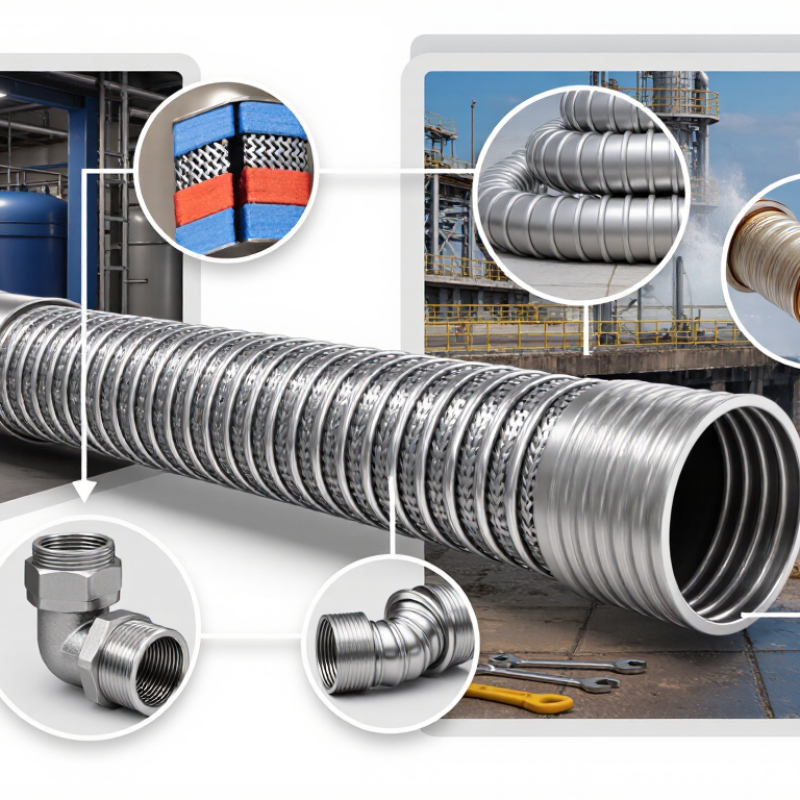
Flexible stainless pipe is not a single product. Its type and construction determine how it performs in real service. Corrugated pipe uses formed stainless steel ribs to provide controlled flexibility. It suits vibration, thermal expansion, and repeated movement. Strip-wound pipe uses interlocked metal strips. It bends easily, but it may offer less resistance to pressure and leakage.
Construction matters at every layer. The inner tube carries the fluid and should match its temperature, pressure, and chemical properties. A braided stainless-steel jacket can improve pressure resistance and reduce excessive stretching. However, more braid does not automatically mean a better pipe. It can also reduce flexibility and increase installation force. End fittings must be compatible with the tube, braid, and connection method.
Check the details carefully. Always compare working pressure, temperature range, bend radius, and movement cycle data. A short pipe with a tight bend can fail early, even when its materials look suitable. I have seen installations where the pipe was forced into alignment instead of allowing natural movement. That mistake leaves bright stress marks near the fitting.
Weld quality, cleanliness, and inspection records also deserve attention. Some specifications sound precise but omit fatigue testing or vacuum performance. That gap should prompt questions. Field conditions are rarely perfect, and selection based only on size can be misleading.
Matching Pipe Materials to Temperature, Pressure, and Fluid Conditions
How to Choose the Right Flexible Stainless Pipe?
A flexible stainless pipe must match the fluid, temperature, and pressure—not just the connection size. Start with a compatibility review. 304 stainless steel suits many clean-water and air systems. Chloride-rich water, salt spray, or aggressive cleaning chemicals may require 316L. Even 316L can pit under warm, concentrated chlorides. A neat datasheet can still mislead.
Temperature changes the pressure rating. Confirm the allowable working pressure at the actual operating temperature, not at room temperature. Check pressure surges, vibration, vacuum, and repeated bending as well. ASME B31.3 provides process-piping design rules, while ISO 10380 addresses corrugated metal hose assemblies. These references help, but they cannot replace application-specific testing. A short hose may tolerate movement better than a long, unsupported loop.
Fluid behavior matters equally. Abrasive slurries can damage thin corrugations. Oxygen service demands exceptionally clean components. Hydrogen and some chemical fluids require specialist material reviews. The NACE IMPACT study estimated global corrosion costs at about 2.5 trillion dollars annually, showing why compatibility deserves early attention. Ask for alloy chemistry, pressure-test results, bend-cycle data, and temperature derating curves. Do not accept “stainless” as a complete specification. That description is too vague. Review the weakest assembly part, including braids, welds, gaskets, and fittings. Engineers sometimes overlook installation radius; this is a practical mistake worth reconsidering.
Evaluating Flexibility, Durability, Corrosion Resistance, and Standards
How to Choose the Right Flexible Stainless Pipe?
Selecting a flexible stainless pipe starts with movement, not appearance. Measure vibration, thermal expansion, bend radius, pressure, and movement cycles. ISO 10380 specifies performance requirements for corrugated metal hose assemblies. It also covers tests for flexibility, pressure resistance, and leakage. A hose that bends easily may still fatigue quickly.
Durability depends on wall thickness, braid construction, weld quality, and operating temperature. Check the manufacturer’s cycle-life data under conditions close to your application. ASTM A269 supports requirements for austenitic stainless tubing used in general service. For process systems, ASME B31.3 helps control design, fabrication, inspection, and testing practices. Standards do not replace engineering judgment. They only create a reliable starting point.
Corrosion resistance requires more than choosing stainless steel. Chlorides, acidic condensate, stagnant water, and high temperatures can attack unsuitable alloys. The AMPP IMPACT study estimated global corrosion costs at approximately 3.4% of global gross domestic product, or about 2.5 trillion dollars annually. That figure makes material selection difficult to ignore. In field inspections, small surface discoloration is often dismissed too early. That is a mistake, though not every mark means structural failure. Confirm the fluid chemistry, chloride level, cleaning method, and inspection interval. An alloy with higher resistance may reduce risk, but it can increase cost and still fail under poor installation.
Comparing Installation Requirements, Maintenance Needs, and Total Cost
Choosing the right flexible stainless pipe starts with installation requirements, not price. Check pressure, temperature, fluid compatibility, and the required bend radius. A pipe that bends easily may still fail when forced around a sharp corner. Measure the route carefully, including movement, vibration, and connection space. Threaded, flanged, and compression fittings each require different tools and preparation. Clean the pipe before assembly. Small particles can damage seals and restrict flow.
Maintenance needs can change the real cost. Smooth stainless surfaces usually resist corrosion and reduce deposit buildup, but they are not maintenance-free. Inspect joints for leaks, check supports for movement, and look for flattened sections after installation. In areas with heat or vibration, schedule inspections more frequently. I have seen well-installed pipes develop loose connections because supports were spaced too far apart. That detail is easy to miss. It should not be.
Total cost includes labor, fittings, access equipment, inspections, and replacement time. A lower-priced pipe may need more clamps or frequent servicing. A higher-quality option can reduce downtime, but only when its specifications match the application. Compare expected service life, warranty terms, cleaning requirements, and energy loss from unnecessary bends. Ask for documented test results and installation guidance. Estimates are never perfect. Recheck them against site conditions before approving the purchase.
How to Choose the Right Flexible Stainless Pipe?
Comparing installation requirements, maintenance needs, and total cost
The chart uses a 1–5 planning score, where 5 is the most favorable result. Maintenance suitability means lower expected maintenance demand, while total-cost value reflects estimated material, installation, inspection, and replacement costs over ten years for a typical 10-meter indoor service run. Actual results vary with pressure, temperature, connection type, water quality, access, and local labor rates.