Leave Your Message
*Name Cannot be empty!
* Enter product details such as size, color,materials etc. and other specific requirements to receive an accurate quote. Cannot be empty

How to Choose a Ceramic Lined Hose?

Choosing a Ceramic Lined Hose is not just a matter of picking the thickest ceramic or the lowest price. The right choice depends on what moves through the hose, how fast it flows, and how sharply the line bends. A hose carrying abrasive slurry faces different demands from one handling dry powder. Small details matter. A tight bend near a pump can concentrate wear in one spot, while a poorly matched connection may become the weak point.

Materials scientist William D. Callister’s work emphasizes the relationship between a material’s structure and its properties. Applied to hose selection, that principle becomes a practical reminder: “Match the lining to the wear mechanism.” This is an editorial adaptation, not a direct quotation. Ceramic type, lining thickness, hose flexibility, working pressure, temperature range, and end fittings should all be checked against actual operating conditions. Ask suppliers for test data and installation guidance, then compare those details with the process—not just the product sheet.

There is no universal best hose. A thicker lining may improve wear life, yet reduce flexibility. That trade-off is easy to overlook. This guide will examine the key selection factors, common mistakes, and questions worth asking before ordering. Real plant conditions can be messier than a specification sheet suggests. So leave room for inspection, maintenance access, and a little uncertainty. A careful choice starts with evidence, but it should be reviewed once the hose meets the real process.
How to Choose a Ceramic Lined Hose?

Define Ceramic Lined Hoses and Their Industrial Purpose

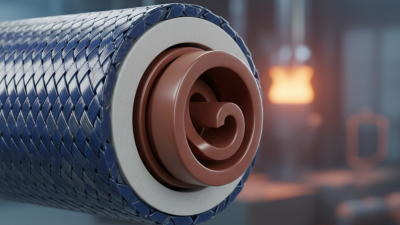
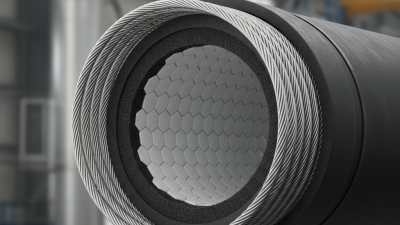
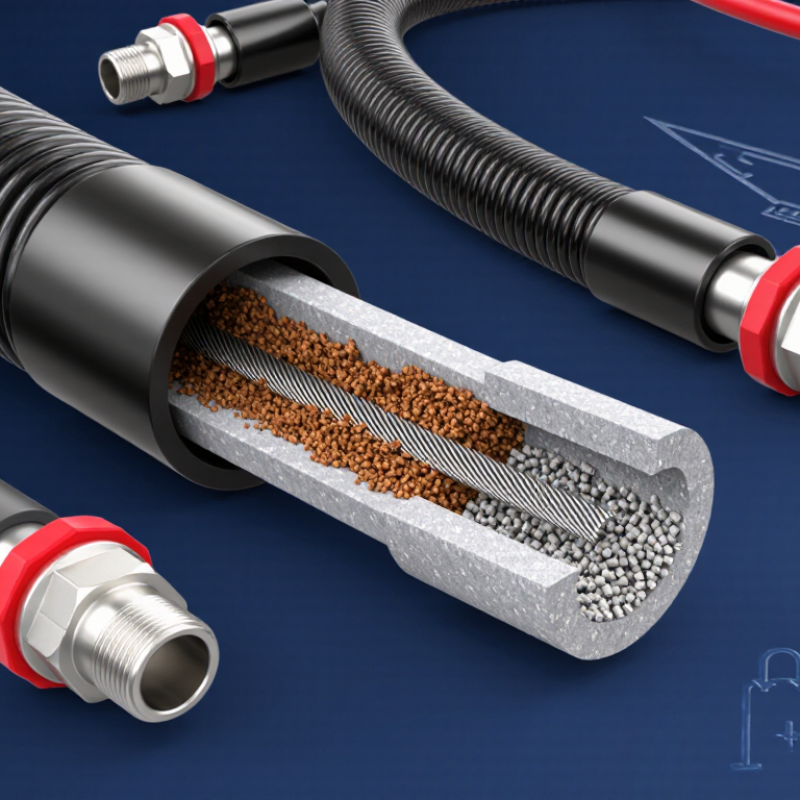
A ceramic-lined hose is a flexible pipeline with a wear-resistant ceramic surface inside. The lining may use small tiles or shaped ceramic sections, secured within a reinforced hose body. It protects the bore where fast-moving solids scrape against the wall. Think of mineral slurry carrying grit through a hose: the rubber exterior bends, while the ceramic interior takes much of the abrasion.

These hoses are used in mining, cement production, power generation, and other processes that move abrasive materials. They can handle mineral concentrates, ash, and dry powders, depending on their design. The benefit is reduced wear in demanding sections of a transfer line. Less obvious, but important: ceramic can be vulnerable to impact, and a heavily lined hose may not bend as freely as a standard hose. The trade-off is real.

Choosing one requires more than naming the material. Check the conveyed particles, flow speed, operating pressure, temperature, and required bend radius. A hose that suits fine slurry may perform poorly with larger, sharp fragments. Installation matters too; tight bends can strain the lining. Inspect ends and bends regularly for wear or damage. No hose lasts forever. Field conditions can be messy, so operating data and maintenance observations should guide the final choice.
Identify the Material, Temperature, Pressure, and Abrasion Requirements

Choosing a ceramic lined hose starts with the material moving through it. Fine, fast-moving sand can wear a hose differently from coarse gravel or sharp mineral fragments. Note particle size, hardness, concentration, and flow speed. A sample of the actual material can reveal details a general description misses. Details matter.

Temperature needs equal attention. Check both steady operating heat and short temperature spikes. The ceramic may tolerate heat, while the hose backing, bonding layer, or outer cover may not. Also consider whether the line bends during operation; repeated flexing can stress the lining. Not every hose fits. I would not treat a catalog maximum as a sensible everyday target.

Pressure selection should account for operating pressure, surges, and any vacuum conditions. Confirm that the hose and end connections are rated for the full system, not just a straight, static test. For abrasion, ask how the lining handles your specific particles and flow pattern. High velocity at a bend or inlet can cause localized wear, even when the rest of the hose looks sound. Inspect those areas during service. It is easy to overlook them. Share operating data with a qualified hose supplier, and request documented limits for temperature, pressure, and bend radius. Some site measurements may be imperfect; record that uncertainty before choosing.

How to Choose a Ceramic Lined Hose? - Identify the Material, Temperature, Pressure, and Abrasion Requirements

Selection factor Information to collect How it affects hose selection What to verify
Conveyed material Material name, solid or slurry, particle size and shape, concentration, moisture, and any chemical additives. Angular, hard particles and concentrated slurries can cause more wear than fine or rounded particles. Chemical compatibility also matters for the hose tube, backing, and seals. Confirm compatibility of every wetted component, not just the ceramic. Provide the supplier with the full process-material description.
Ceramic liner Ceramic type, tile or sleeve design, thickness, coverage, and joint or gap arrangement. Alumina ceramic is commonly used for abrasion resistance; alumina is about 9 on the Mohs hardness scale. Liner geometry and support affect wear life and flexibility. Ask for the ceramic composition and liner construction. Hardness alone does not determine hose life or impact resistance.
Temperature Normal, minimum, maximum, and transient temperatures of the conveyed material and the surrounding environment. The practical temperature limit is determined by the complete hose construction, including the tube, adhesive or backing, reinforcement, and cover—not the ceramic alone. Obtain the supplier's rated continuous and intermittent temperature limits for the exact hose construction and service conditions.
Pressure and vacuum Maximum operating pressure, pressure surges, vacuum level, and whether the line runs continuously or cycles. Pressure capacity depends on hose diameter, reinforcement, temperature, fittings, and construction. Vacuum service may require additional resistance to collapse. Compare the rated working pressure and vacuum rating with the actual system conditions. Confirm surge allowance and fitting ratings as well.
Abrasion and flow Particle hardness and angularity, solids loading, flow velocity, and locations where material changes direction. Wear often increases at bends, transitions, and impact points. Flow conditions and particle characteristics help determine liner thickness and layout. Identify high-wear zones and ask whether the liner design is suitable for the expected flow and impact conditions.
Flexibility and routing Inside diameter, hose length, movement, installation path, bend radius, and connection orientation. Ceramic-lined hoses can be less flexible than unlined hoses. Bending tighter than the specified minimum radius can damage the liner or hose structure. Confirm the minimum bend radius for the selected diameter and construction, and avoid twisting the hose during installation.
Connections and installation End type, flange or coupling standard, material, face dimensions, and any alignment or support constraints. A suitable hose can still fail prematurely if the fittings, seals, supports, or transitions are incompatible with the service. Check fitting pressure and temperature ratings, sealing materials, connection dimensions, and installation support requirements.
Inspection and maintenance Inspection access, operating hours, replacement interval, and consequences of an unplanned shutdown. Inspection planning helps detect external damage, leakage, or changes in performance before they become a service interruption. Follow the hose supplier's inspection guidance and replace a hose if it shows leakage, exposed reinforcement, severe deformation, or other structural damage.

Note: Final selection should be based on the complete hose assembly and the actual operating conditions. Confirm pressure, temperature, vacuum, bend-radius, and material-compatibility limits with the hose supplier.

Compare Ceramic Lining Types, Hose Structures, and Connection Options

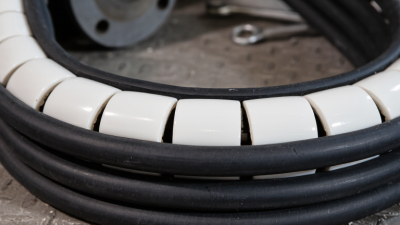
Choose a ceramic-lined hose by matching the lining to the material, flow, and bend radius. High-alumina tiles suit severe sliding abrasion, while smaller ceramic segments can better tolerate hose movement. Bead-style linings may help with fine, abrasive slurry, but particle size and impact still matter. No lining wins every duty. A hose carcass also matters: rubber, textile reinforcement, and steel helix options affect pressure capacity, vacuum resistance, and flexibility. For tight bends, check the manufacturer’s minimum bend radius; forcing a stiff hose can crack its lining.

Connection options include fixed flanges, grooved couplings, and hose-tail fittings. Choose for the system’s pressure, vibration, and maintenance access, not convenience alone.

The U.S. Department of Energy’s Improving Pumping System Performance sourcebook reports that pumping systems use nearly 20% of global electrical energy.

That broad estimate is not a ceramic-hose test, but it underscores why flow restrictions and undersized connections deserve attention. Specify inside diameter, working pressure, temperature, media, and end connections together. Fit matters. I would still verify the assembly against actual slurry samples and operating bends; a clean catalog specification cannot capture every impact or wear pattern.

Evaluate Flexibility, Service Life, Maintenance, and Total Cost

How to Choose a Ceramic Lined Hose?

Flexibility is not just a feature; it determines whether the hose fits safely into a real installation. Check the minimum bend radius and compare it with the available space, movement, and vibration. Ask how the hose should be supported. A tight bend can strain connections or accelerate uneven wear. Small details matter.

Service life depends on the conveyed material, flow speed, temperature, and operating cycles. Sharp particles may wear a lining differently from rounded ones, so request service data from comparable conditions. Inspect the hose regularly for leaks, loose fittings, unusual vibration, and changes in pressure or flow. Look closely at bends and connection points. Keep simple inspection records. They help reveal gradual changes, though they will not predict every failure.

Compare total cost, not just the purchase price. Include fittings, installation labor, inspection time, cleaning, replacement intervals, and the cost of a shutdown. A lower-cost hose may need more frequent replacement. Maybe. Wear-life estimates can be uncertain when operating conditions vary, so treat them as planning guidance rather than a promise. Ask what inspection schedule and replacement criteria the supplier recommends for your specific duty.

Verify Quality Standards, Compatibility, and Supplier Support before Selection

Before choosing a ceramic lined hose, verify how its quality is measured. Request inspection records showing lining thickness, hardness, bond integrity, and pressure-test results. Ask which test methods were used and whether results apply to the exact hose construction being quoted. A certificate alone is not enough. Small details matter. Check that documents identify the hose size, lining material, reinforcement, and production batch. If these details are missing, ask for clarification instead of assuming the product matches your operating conditions.

Compatibility depends on more than the material being conveyed. Confirm operating temperature, pressure, flow rate, particle size, and bend radius with the supplier. Share real process conditions, including occasional pressure spikes or abrasive slurries; incomplete information can lead to a poor fit. It is easy to focus on the hose itself and overlook connection dimensions or installation space. I would check both before ordering. Ask what support is available for installation guidance, troubleshooting, and replacement parts, and request clear response times. Good technical support should explain limitations, not only promise performance.